

Wondering how to cook wheat berries or looking for wheat berry recipes?
Wheat berries are one of those grains I buy in bulk to save money and keep on hand because they are great for storing longterm for emergencies and pantry recipes, but also because they’re great in healthy grain bowls (which is how we eat wheat berries the most).
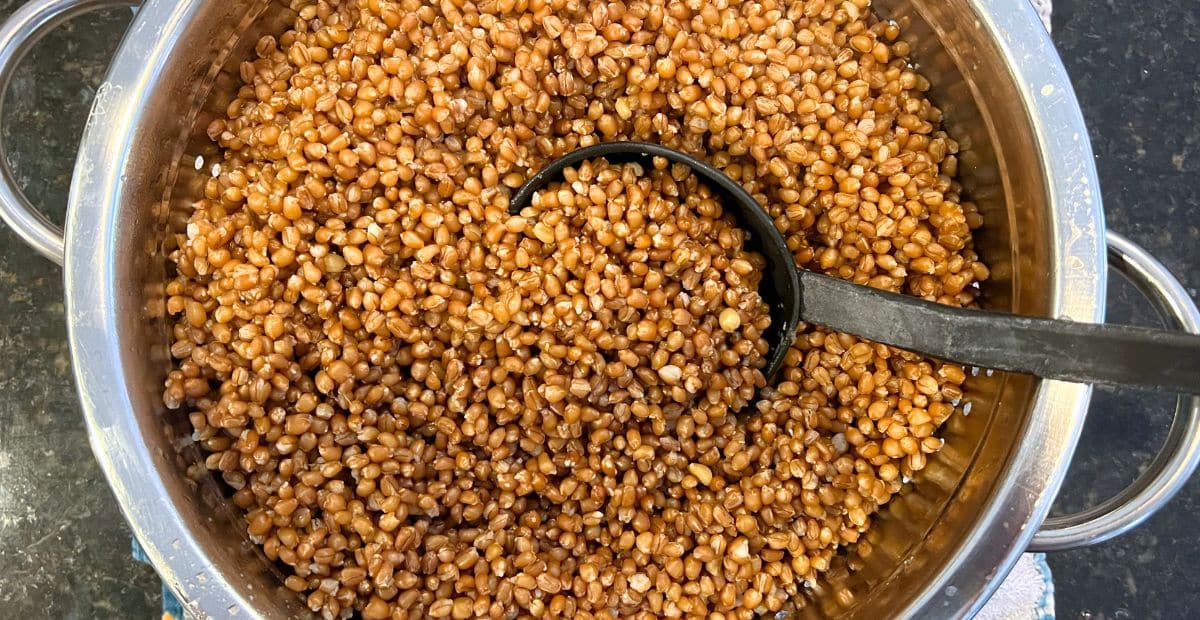
You can also use wheatberries for fresh milled flour for baking, yummy bowl recipes, ingredients for hearty soups, ways to stretch the grocery budget and make meals more filling and more.
This is your guide to using wheatberries!
Learning To Cook With Wheat Berries
If you’ve never cooked with wheat berries, you may be wondering about them (like I was!).
In this Wheatberry Guide, I’ll cover how to cook wheat berries, why wheat berries are good food storage ideas, and how to use them as alternatives to rice or other grains alternative ideas.
I’ll also cover a really confusing part about wheat berries: what’s the difference between hard and soft wheatberries and what’s the difference between red wheat berries vs. white wheat berries.
(And what recipes to use for wheat berry types.)
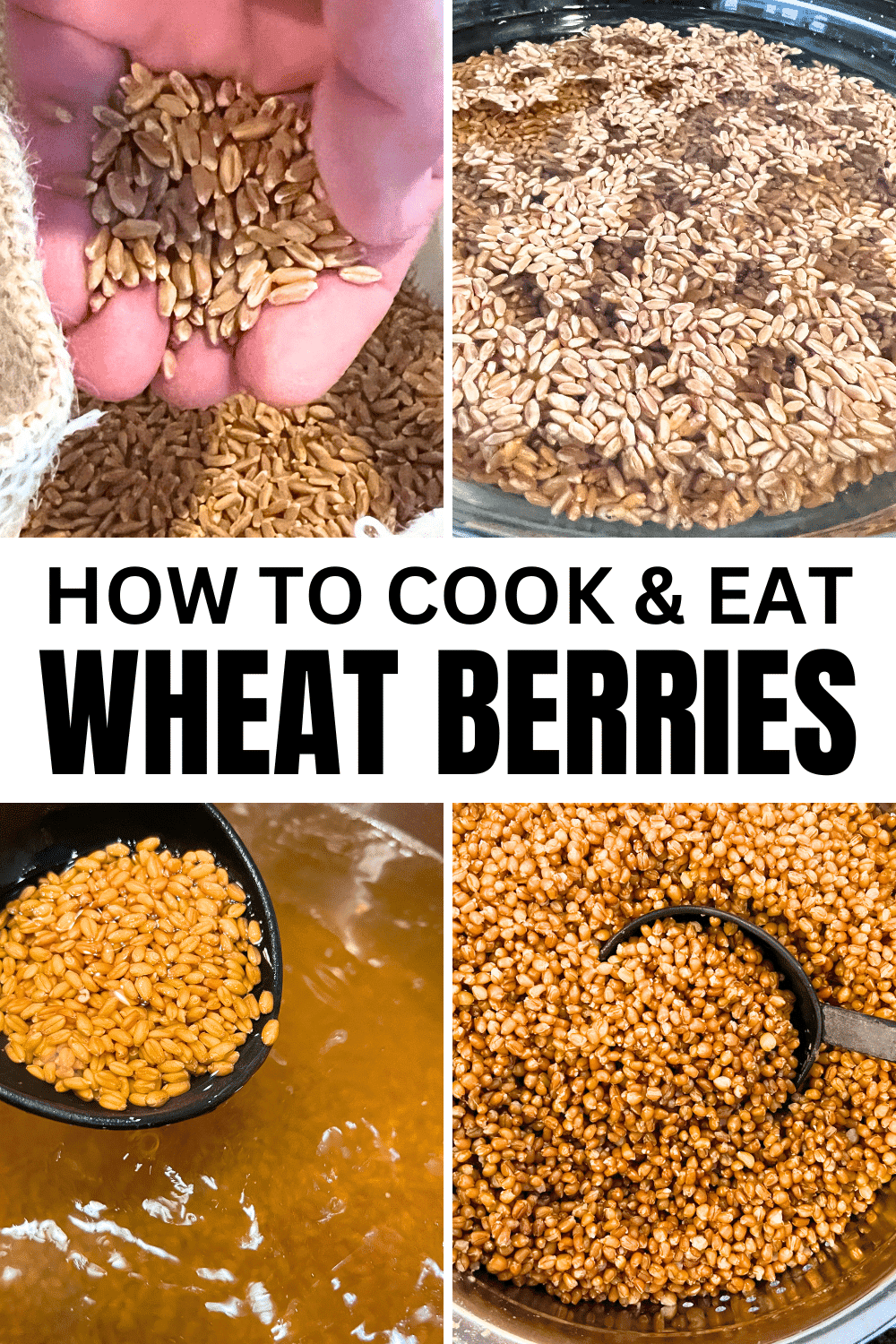
First, let’s start with…
What are wheat berries?
Wheat berries are whole, unprocessed kernels of wheat before anything’s been ground into flour.
Basically, wheat berries are flour before it becomes flour.
Each “berry” includes all three parts of the grain:
- the bran (outer shell)
- the germ (the nutrient-packed core)
- the endosperm (the starchy middle)
Wheat berries are a little larger than rice grains. They look like tiny, tan /white-ish or reddish-brown seeds and, when you cook them, they’re chewy with a slightly nutty flavor—kind of like farro or chewier barley, if you’ve had those.
They’re super nutritious and full of fiber, protein, and vitamins.
Wheat berries can be ground to make whole wheat flour or you can cook them for breakfast or lunches and dinner (and they’re very filling!).
That makes them perfect cheap dishes for longterm food storage and pantry foods too if you’re prepping emergency food.
Where do you buy wheat berries?
Wheat berries can be found in the grains section of some grocery stores and natural food stores.
Look near the areas where they keep rice, barley, beans, etc.
To save on cost, we buy our wheat berries in bulk like this.
Then, I portion out 1-2 cups dried wheatberries (uncooked) and vacuum seal them in serving packages.
If you prepare wheat berries for long-term food storage like this and store them in a cool, dry place, they will last for YEARS.
(I’ve read that, stored correctly, wheat berries last 30 years to indefinitely!)
IMPORTANT: Be sure to keep the wheat berries dry because any moisture will cause wheat berries to sprout or grow mold. If your wheat berries are moldy, smell “off” or rancid, or the texture seems to have changed, don’t eat them and discard them instead.
If you’re gluten-free, have wheat allergies, Celiac disease, or other conditions that make you sensitive to wheat, you don’t want to cook with wheat berries.
How do you eat wheat berries?
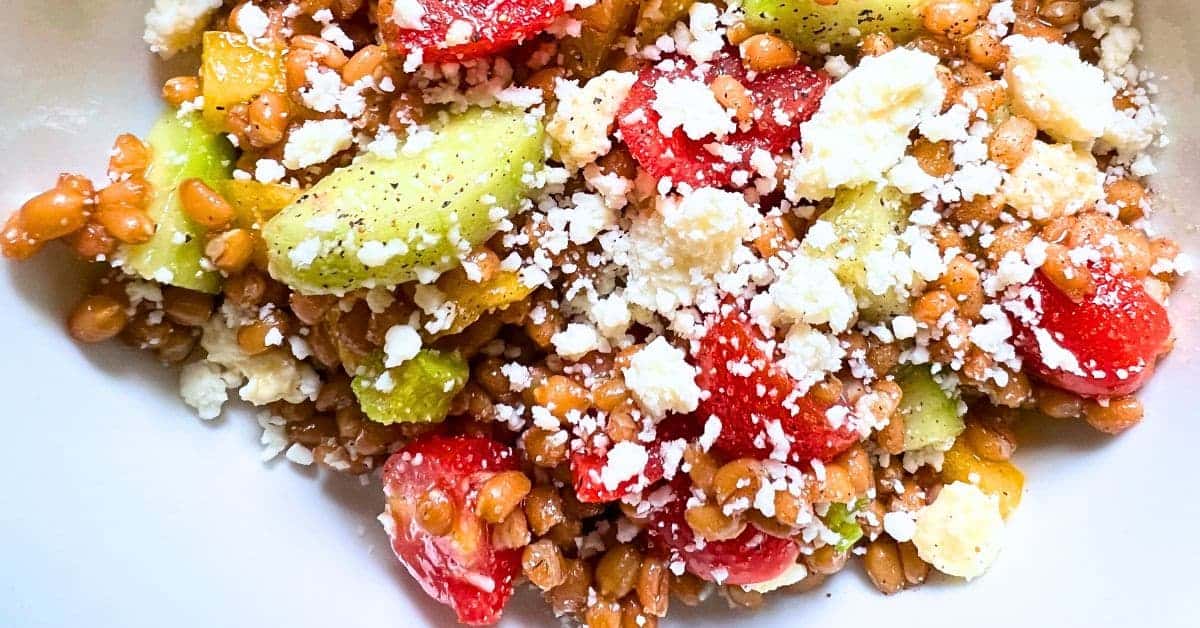
I love cooking wheatberries for healthy salad recipes or healthy bowl recipes. If you precook a batch, you can whip up an easy dinner in no time with them.
You can eat them cooked whole in salads, soups, and breakfast bowls, or grind up the pre-cooked berries to make fresh whole wheat flour at home for baking recipes.
A couple of years ago we started using wheat berries and we especially love them as filling and hearty bowl ingredients to use instead of rice.
Wheat berries are an ideal food storage item for your prepper pantry storage because they last a very long time when stored and you can use them for breakfast, to make soups heartier or fillers to stretch meals, or grind them for flour and baking.
FOOD STORAGE TIP: If you’re going to add wheat berries to your longterm food storage, I recommend also adding a manual grains grinder and a vacuum sealer. Your grains will last longer if you store them whole (uncooked) and then only grind them to flour when you need the flour. (Don’t grind the flour to store longterm.)
Wheat Berries Breakfast Ideas
- Warm breakfast bowl with milk, cinnamon, maple syrup, and berries (or whatever toppings you eat with oatmeal)
- Wheat berries mixed with yogurt
- Add to oatmeal for extra texture
- Breakfast parfait layered with Greek yogurt and fruit

Wheat Berry Salads & Grain Bowl Ideas
Mix cooked wheat berries with these salad or bowls:
- Mediterranean salad with cucumber, tomato, feta, olives, and lemon vinaigrette
- Autumn salad with roasted squash, dried cranberries, pecans, and goat cheese
- Kale salad with apples, walnuts, and Parmesan
- Caprese-style salad with tomatoes, mozzarella, basil, and balsamic
- Southwest salad with black beans, corn, avocado, and cilantro-lime dressing
- Asian-inspired salad with edamame, carrots, scallions, sesame dressingRoasted vegetables with tahini sauce
- Grilled chicken, broccoli, and pesto
- Salmon, asparagus, and lemon
- Tofu, mushrooms, bok choy, and soy-ginger sauce
- Chickpeas, roasted cauliflower, and harissa sauce
Soups & Stews
Add wheat berries to soups and stews, especially if you’re trying to make a hearty soup or trying to stretch the groceries budget!
- Vegetable soup
- Chili
- Beef and barley-style soup (using wheat berries instead)
- Mushroom soup
- Lentil stew
- Chicken vegetable soup
- Minestrone
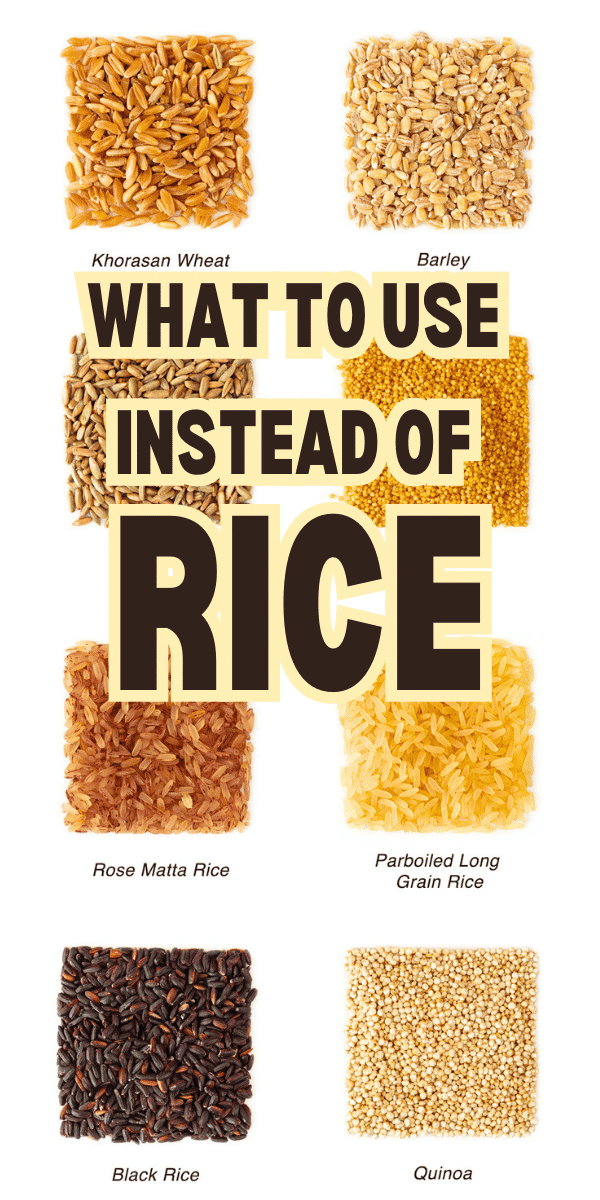
There are so many ways to use wheat berries (especially as a substitute anytime you would use rice, quinoa, etc.).
ALSO CHECK OUT: WHAT CAN YOU USE INSTEAD OF RICE?
Cooking Wheat Berries Recipes
How do you cook wheat berries?
Wheat berries are simple to cook!
The best way to cook wheat berries:
- Cover them with water in a large pot
- Add a pinch of salt
- Bring wheat berries to a boil
- Reduce heat and simmer for 45 minutes to 1 hour, or until soft when pierced
After cooking, wheat berries will still retain a firm but chewy texture.
IMPORTANT COOKING NOTE: Wheat berries don’t get soft like rice. They will retain a firmer texture and be chewier. They should not be crunchy after cooking.
You can then serve wheat berries warm or cold, depending on your recipe!
Should wheat berries be soaked before cooking?
I soak wheatberries overnight before cooking, but it’s not necessary that you soak them.
Soaking wheat berries makes them cook faster and also helps remove some of the things that make wheat hard to digest for some people.
After soaking, discard the soak water and then place the berries in fresh water in a pot for cooking.
Wheat berries are finished cooking when they’re tender and softer and you can pierce them. (I just put some in a spoon and then use my fingernail to see if I can “mush” them a little.)
You can start checking if wheat berries are cooked around the 30 minute mark.
You may find that your wheat berries cook faster (or need more time) based on how much you are cooking.
RECIPE NOTES: 1 cup of dry wheat berries makes around 3.5 cups of cooked wheat berries.
Red Wheatberries vs White Wheatberries: Types of Wheat Berries and Wheat Berry Color
There are different types of wheat berries:
- Hard wheat berries
- Soft wheat berries
- White wheat berries
- Red wheat berries
You can cook any of them for cooked dishes (like breakfast cereal, bowl recipes, or salad recipes) or you can ground them for flour to make baked goods.
They type of wheatberry you use for baking will depend on what you’re baking. If you’re making a hearty bread, you might use hard, red wheat berries.
If you’re making fluffy baked goods like cookies or pancakes, you could use soft, white wheat berries.
If you’re just eating wheat berries in salads or bowls, it doesn’t really matter which one you cook. The flavor will vary slightly from a plain flavor to a more nutty flavor.
About Hard Wheat Berries
USE FOR: Denser bread flour or cooked dishes when you want more chew than soft rice.
Hard wheat berries are high in protein and gluten, making them ideal for bread baking.
When you grind hard wheat berries, they produce a dense, chewy flour — the same used in recipes like artisan breads and hearty and nutty bread recipes.
COOKING TIP: If you sometimes have a hard time digesting gluten, you may want to try soft, white wheat berries instead.
Use hard wheat berries for:
- Grain bowls in place of cooked rice
- Chewy wheat berry salad
- Breakfast bowls with fruit, nuts, and honey (like you would make oatmeal)
- Hearty homemade sandwich bread flour
- Artisan sourdough flour
- Pizza dough flour
- Bagel flour
- Pretzel flour
- Whole wheat pasta
About Soft Wheat Berries
USE FOR: tender, fluffy baked goods or cooking for dishes.
Soft wheat berries are lower in protein and gluten, which makes them great for other baked goods like muffins, pancakes, cookies, and pastries.
They grind into a lighter, softer flour that’s ideal for recipes where a more delicate flour is needed like pancakes.
(Think of the things you would typically use white flour for in recipes.)
They’re also perfect if you want all the benefits of whole wheat without that strong “whole wheat” flavor.
Use soft wheat berries for:
- Breakfast cereal (like porridge or oatmeal)
- Bowl recipes
- As an alternative to rice
- Salad recipes
- Muffins flour
- Pancakes or waffles flour
- Pasta flour
- Cookies flour
- Cake flour
- Pie crusts flour
- Quick breads flour (banana, pumpkin, etc.)
- Biscuit flour
- Scones flour
- Homemade crackers
- Flour tortillas
About White Wheat Berries
White wheat berries come from a lighter-colored wheat variety that’s naturally milder in flavor.
They have a slightly sweet, less bitter taste compared to red wheat.
They are not as dense and chewy as red wheat berries.
White wheat berries come in both hard and soft.
White wheat is a favorite for whole grain baking that doesn’t taste too “wheat-y” like flour used in recipes for muffins, pancakes, and cookies.
ABOUT WHEAT BERRY COLOR: Wheat berries color does not play a role in cooking, but it will affect the taste. You can cook both colors of wheat berries or grind either of them for flour.
About Red Wheat Berries
Red wheat berries have a robust, hearty flavor and a reddish-brown outer bran layer. They are probably the strongest wheatberries, in my opinion.
Hard red wheat is common in whole wheat baking.
These are the wheatberries used in traditional whole wheat flour and give wheat baked goods that bold, nutty taste.
If you’re looking for a rustic bread flour, grind red wheat berries and use that flour for baking.
Red wheat berries also come in both hard and soft.
I hope you enjoy learning to cook wheat berries as much as I did!
